THE HEALTH DEPARTMENT ADVISES THE PUBLIC TO LOOK OUT FOR THE INSPECTED AND PASSED SEAL ON LOCAL MEATS BEFORE PURCHASING.
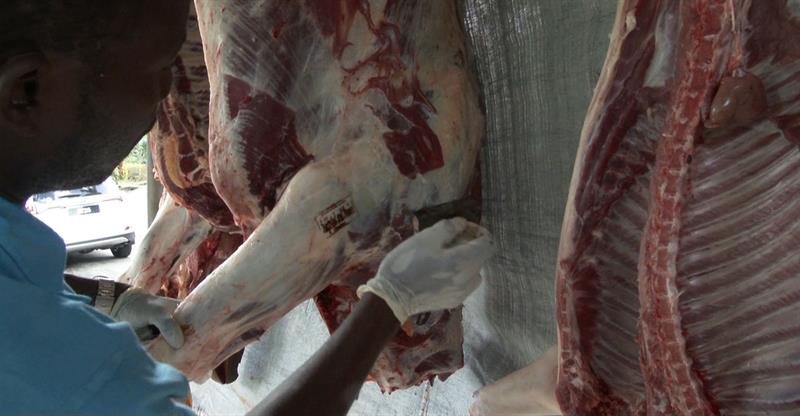 The festive season provides the perfect opportunity for new, seasonal, and regular butchers to cash in on the high demand for local meats. It is also the time when the ministries of health and agriculture increase the monitoring and surveillance of butchery practices to ensure conformity to public health guidelines and procedures.
The Environmental Health Department has also beefed up the inspection of butchers for proper meat handling procedures.
Senior Environmental Health Officer, Ernie Pierre, calls on butchers to register early with the Department of Environmental Health to ensure they meet the requirements before slaughtering animals.
“All butchers and their helpers need to have a health certificate. That is a requirement by law: to be able to handle and to vend meat to the public, they need to have health certificates. So we are asking butchers to come in and register with our office and to do that very early,” Mr. Pierre said.
“There are a number of processes they need to observe. They need to go to the police to get a butcher’s license or permission to slaughter. Once they have this document the animal for slaughter will also have to receive an ante mortem inspection. That ante mortem inspection will be done by veterinary officers, and must be done at least 24 hours in advance of slaughter.”
Securing public health is central to the ante mortem inspection which can pick up diseases in animals that may not be seen in a post mortem inspection. An ante mortem inspection declares the animal fit or unfit for slaughter.
Senior Agricultural Officer in the Veterinary and Livestock Division, Columbus Philippe, explains.
“This is very important in the slaughtering of animals especially during the festive season. Today we are doing the ante mortem inspection where we physically examine the animals to see if they are healthy and fit for slaughtering. Upon passing the inspection we tag the animal with a specific ID number to say that the animal is fit for slaughtering. If the animal is not fit for slaughtering we won't tag the animal but we will issue a health certificate to say that the animal is fit or not fit for slaughtering.”
Prior to slaughtering, butchers must ensure they have the necessary documentation on hand including a health certificate for the animal, and a receipt of purchase or declaration of ownership from the police in readiness for the post mortem examination.
“Following the post mortem examination of that animal, once it is fit for slaughtering you would in fact receive another certificate which is a wholesomeness certificate which should be kept. The meat will also be stamped with a stamp that reads inspected and passed.”
Pierre also referenced the penalties for non conformance to the procedures.
“Butchers who do not adhere to the procedures may risk the animal being seized and condemned. In the absence of the certificate it means that we cannot ascertain whether the animal was in fact a healthy animal to have proceeded to slaughter, and as a result that animal or the carcass of that animal will be condemned and seized and disposed of.”
The public is advised to be vigilant when purchasing local meat from butchers.
"We encourage consumers to look for that stamp on the meat. The stamp will prove that this carcass has received inspection by either the Ministry of Health or the Ministry of Agriculture and it is safe to consume."
The Environmental Health Department encourages the public to contact the Bois d' Orange, Vieux Fort, or Soufriere offices for information on proper meat handling procedures.